
At Dura-Ramp, understanding how ramp capacity ratings are determined is fundamental to how we design and manufacture every product. Every rating reflects a disciplined engineering process built on material science, structural analysis, and real-world application requirements.
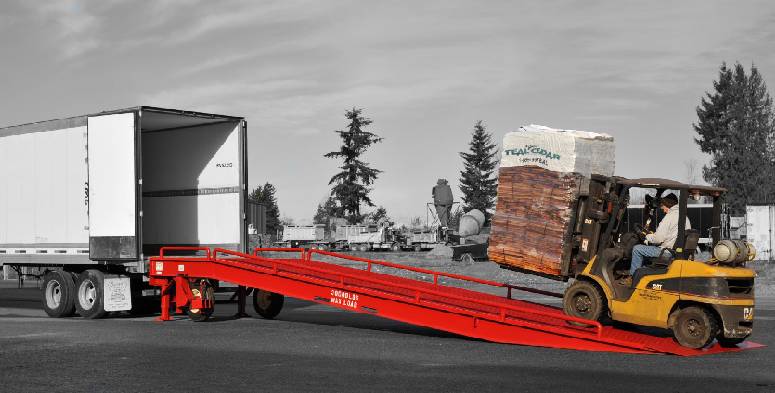
Follow these load testing procedures for ensuring ramp safety.
Materials and Construction Method
Capacity begins with what the ramp is made of and how it is assembled. Our ramps are built from 100% welded steel construction, which directly affects structural integrity in several critical ways.
Material grade and thickness determine the base load-bearing capability before any other engineering variable is applied. Welded joints distribute stress continuously across the connection, eliminating the failure points that bolt connections introduce under dynamic loading conditions. Internal reinforcement and cross-member spacing control deflection under load, keeping the ramp surface stable when equipment is in motion. The geometry of the ramp profile itself also influences how load transfers through the structure to the ground contact points.
Welded steel construction is an engineering decision that produces measurably stronger and more predictable structural performance.
Engineering Calculations Behind the Rating
Professional engineers translate material properties into rated capacities using structural analysis methods. Key factors include deflection limits, which industry practice restricts to specific length-to-span ratios to prevent unsafe bending under load. Static versus dynamic loading must also be accounted for, since a forklift in motion generates impact forces beyond its static weight. Point load distribution is another critical variable, as forklift and pallet jack wheels concentrate load onto small contact areas, creating localized stress demands that a distributed load calculation alone would underestimate. Span length and operating angle round out the primary variables, as longer spans and steeper approach angles change the effective structural demands on the ramp.
Learn how to prevent load shift during ramp operation.
Safety Factors and Built-In Margin
A properly engineered capacity rating is not the ramp’s structural limit. It is the working load threshold, set well below the point of failure. Reputable industrial ramp manufacturers apply a factor of safety so that the structure can handle real-world variables, including material imperfections and weld variability, load impact from equipment acceleration and deceleration, and long-term wear and cumulative stress exposure.
Why Custom Engineering Changes the Equation
Generic capacity ratings assume generic use cases. When equipment type, axle loads, operating angle, and surface conditions vary, a one-size-fits-all rating may not reflect actual operational demands. Custom ramp design allows engineers to calculate capacity for the specific equipment and environment the ramp will serve, producing a rating grounded in application reality rather than worst-case approximation.
Work With a Manufacturer That Engineers to Specification
Capacity ratings carry real consequences for equipment, personnel, and operations. With over 30 years of manufacturing experience and in-house custom design capability, we engineer ramps to your exact operational requirements. Contact our team at 1-877-820-1333 to discuss your load specifications and get a ramp built to handle them.


