
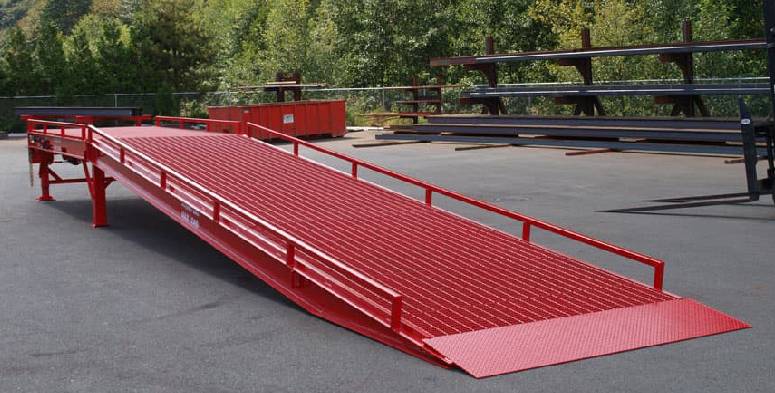
At Dura-Ramp, we build loading ramps to handle the demands of industrial operations, but the ramp itself is only part of the equation. The right ramp accessories are what separate a functional dock setup from one that consistently moves freight without delays, equipment damage, or operator hesitation. For facilities managers and operations directors running high-cycle dock environments, the accessories you spec alongside your ramp have a direct impact on throughput.
The Real Cost of Underequipped Ramps
Every minute of delay at the dock compounds across a full shift. Manual height adjustments, poor surface traction, and rough ramp transitions each add friction to what should be a continuous operation. The problem isn’t always the ramp. It’s the configuration around it. Identifying which accessories address your specific bottlenecks is the starting point for any efficiency improvement.
Height Adjustment Systems
Manual height adjustment is one of the most consistent throughput killers in multi-trailer operations. When dock plates need to be repositioned between trailer swaps, one misaligned deck height stalls the entire cycle.
Electric or hydraulic height adjustment systems eliminate that variable. A single operator can match ramp height to trailer deck in under a minute, a task that otherwise requires manual cranking, shimming, or repositioning that pulls both time and personnel.
Easy-Lift Electric Height Adjustment
Our Easy-Lift electric height adjustment system installs directly onto existing portable dock equipment, which means facilities don’t need to replace functional ramp infrastructure to gain the benefit. The retrofit capability makes it a practical upgrade for operations carrying an installed base of portable ramps, not just a feature for new purchases. For high-cycle facilities running multiple trailer changes per shift, the cumulative time savings are substantial.
Surface Traction and Ramp Decking
Steel ramp surfaces without integrated traction features create two problems: weather-driven slowdowns and operator hesitation on inclines. Both reduce cycle speed.
Ramp decking built with expanded metal grating or diamond-plate surfaces maintains grip year-round, including during rain and winter conditions. The operational difference matters most in northern climates where surface icing on smooth steel can halt operations entirely or force crawl-speed movement that disrupts dock schedules.
Key considerations when evaluating ramp surface treatments:
- Permanent vs. applied solutions: Traction built into the ramp construction eliminates reactive maintenance. Applied coatings and abrasive strips degrade with use and require monitoring and replacement.
- Debris clearance: Expanded metal grating allows debris and moisture to pass through rather than accumulate, maintaining consistent grip across shifts.
- Load compatibility: Surface treatment must be evaluated against the wheel type and load weight of the forklift equipment in use.
A properly specced deck surface removes weather as an operational variable rather than treating it as an ongoing risk to manage.
Approach Plates and Transition Geometry
The ramp-to-ground and ramp-to-dock transitions are where equipment takes its heaviest shock loads. An abrupt angle at either end forces operators to slow down, ease over the edge, and accelerate again, adding time to every single pass while increasing wear on forklift masts, tires, and forks.
Beveled approach plates and transition lips reduce entry and exit angles to a range that allows operators to maintain consistent speed through the transition rather than stopping to negotiate it. The efficiency gain is incremental per pass, but across the volume of daily forklift cycles on a busy dock, it accumulates into measurable reductions in cycle time and equipment maintenance intervals.
Forklift availability directly affects throughput. Reducing shock load at ramp transitions extends service intervals and keeps equipment in operation rather than in the shop.
Learn how to choose the right loading ramp accessories for your operation.
Side Curbs and Wheel Guides
Operators reduce speed on ramps without edge protection, not because of policy, but because the risk of edge dropout is real and visible. That hesitation is built into every trip until structural reassurance removes it.
Side Curbs
Side curbs in the four to six inch range provide the physical boundary that allows operators to focus on load control rather than lateral positioning. The secondary benefit is freight protection: pallet drops at ramp edges result in product damage and cleanup time that halts dock operations.
Wheel Guides
Wheel guides deliver alignment cues for operators navigating narrow ramp widths or wide loads. In facilities with high operator turnover, wheel guides reduce the decision load on newer personnel and maintain consistent cycle speed across experience levels. Fixed guides work for standardized equipment; adjustable systems accommodate variable load widths.
Side curbs and wheel guides aren’t only OSHA considerations. They’re speed enablers that remove the caution that absent edge protection creates.
Assessing Your Dock Configuration
No two dock setups have the same bottlenecks. A high-cycle cold-storage operation has different priorities than a single-shift distribution facility. The right combination of accessories depends on trailer variety, forklift equipment, climate exposure, and operator experience levels.
At Dura-Ramp, we work with operations teams to evaluate existing ramp configurations and identify where accessory upgrades deliver the clearest efficiency return. If your dock setup isn’t performing at the throughput your equipment should support, call our team at 1-877-820-1334 to discuss what a properly equipped ramp configuration looks like for your specific operation.


