
Choosing the right loading ramp slope angle is essential for safe, reliable loading and unloading operations in warehouses and industrial facilities. The slope angle you select affects how easily equipment moves, how safe workers are during use, and how well the ramp performs over time. At Dura-Ramp, we know how important it is to balance performance, safety, and ease of use when selecting ramps. That is why we have outlined key considerations to help with understanding ramp slope angles.
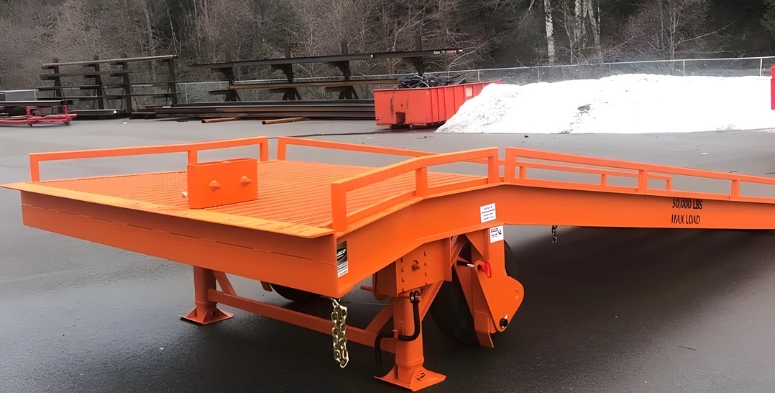
Learn more about loading dock ramp slope requirements.
What You Need to Know About Ramp Slope Angles
Ramp slope angle refers to the angle created between the ramp surface and the ground. This measurement directly influences how steep a ramp feels and how easy it is to move loads up or down it. A clear understanding of slope angles can help you choose a ramp that supports efficient workflow and safe operations.
What is Slope Angle and Why it Matters
Slope angle is measured in degrees, but the important part to focus on is how that angle feels during use. A lower slope angle typically means a gentler incline, making it easier to push or drive equipment up and down the ramp. This can reduce strain on workers and lessen the risk of accidents during loading and unloading.
In contrast, steeper slope angles may require more effort from workers and equipment. While steeper ramps can save space, they might not be suitable for all types of loads or frequent use. Balancing accessibility and performance is a key part of understanding slope angles and selecting the right ramp for your needs.
How Slope Affects Safety and Productivity
The slope of a ramp affects safety in tangible ways. If the angle is too steep, workers may struggle to control equipment, which increases the risk of slips or tip-overs. Choosing a slope that feels manageable can help support safer movement of carts, dollies, or vehicles. Productivity can also be influenced by ramp slopes.
A ramp that is easier to use allows workers to move loads more quickly and confidently, reducing fatigue and improving workflow. Understanding these impacts helps you match ramp slope to the right yard ramp for your operation.
How to Choose the Right Slope Angle for Your Ramp
Before selecting a slope angle, consider the types of equipment you use and how often the ramp will be in operation. It helps to think about future needs as well as current demands. A well-chosen slope angle supports both safety and efficiency without creating unnecessary challenges during busy work periods.
At Dura-Ramp, we are committed to helping you find the right ramp solutions for your facility’s needs. Contact us to explore the different ramp options available and to get guidance on choosing the ideal ramp slope angle for safe and efficient operations.


