
Understanding the Different Types of Warehouse Loading Docks
December 21, 2023 Portable Loading DocksWarehouse loading docks are the vital nexus where the transportation network converges with the storage facility, creating the seamless flow of goods. A nuanced comprehension of the different types of warehouse loading docks is instrumental for businesses aiming to optimize their supply chain operations. As a leading provider in the loading dock industry, Dura-Ramp understands the significance of different types of warehouse loading docks. That is why our experts have gathered some information on understanding the different types of warehouse loading docks to help you make an informed decision.
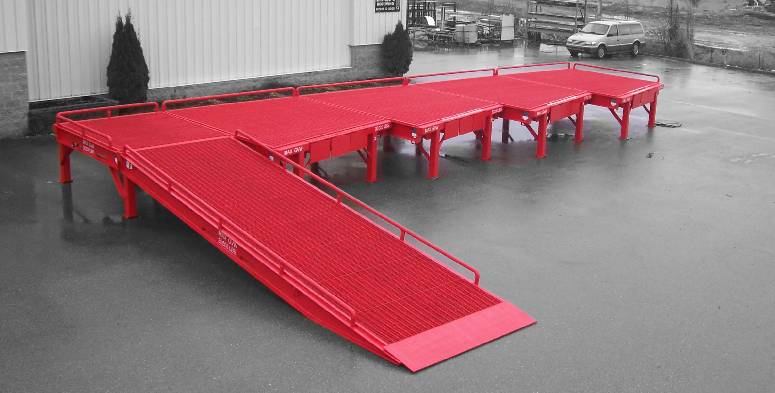
Learn about some of the different types of heavy-duty loading ramps.
Types of Warehouse Loading Docks
1. Flush Loading Docks
Flush loading docks, also known as ground-level docks, defy the conventional raised platforms. These docks sit at ground level, eliminating the height differential between the truck bed and the warehouse floor. This design is particularly advantageous for facilities with specialized equipment or oversized cargo that might face challenges navigating elevated dock ramps. Flush docks offer seamless access to material handling equipment, enhancing operational efficiency.
2. Enclosed Loading Docks
Enclosed loading docks provide an additional layer of protection against external elements. Characterized by walls and doors, these docks can be closed when not in use, safeguarding the warehouse interior from adverse weather conditions, dust, and pests. The enclosed design is especially beneficial for facilities handling sensitive or perishable goods, ensuring that the cargo remains secure and unaffected by external factors.
3. Sawtooth Loading Docks
The Sawtooth loading dock design is distinctive, resembling the teeth of a saw when viewed from above. This layout allows for more loading bays along the warehouse wall. Sawtooth docks optimize space and improve traffic flow, allowing multiple trucks to be loaded or unloaded simultaneously. This design is often seen in facilities dealing with high-volume goods and looking to enhance overall efficiency.
4. Depressed Loading Dock
A depressed loading dock, also known as a pit dock, involves a recessed section in the warehouse floor where the loading dock is positioned. This design accommodates a more seamless transition of goods between the truck bed and the warehouse floor. Depressed docks are advantageous when a facility requires a lower dock height to match the truck bed, promoting smoother material handling operations.
5. Open Loading Docks
Unlike enclosed docks, open loading docks lack physical barriers like walls and doors. While providing less protection against external elements, open docks offer increased flexibility and accessibility. This design suits businesses dealing with goods less sensitive to environmental conditions and where quick and unrestricted access is prioritized.
To gain further knowledge about loading docks, contact the specialists at Dura-Ramp. We are available to address any inquiries or issues about our offerings. Complete our online contact form, and we will gladly provide the necessary details.


